
Bridge Demolition Without Explosives – Dramlje Bridge Renovation Case Study
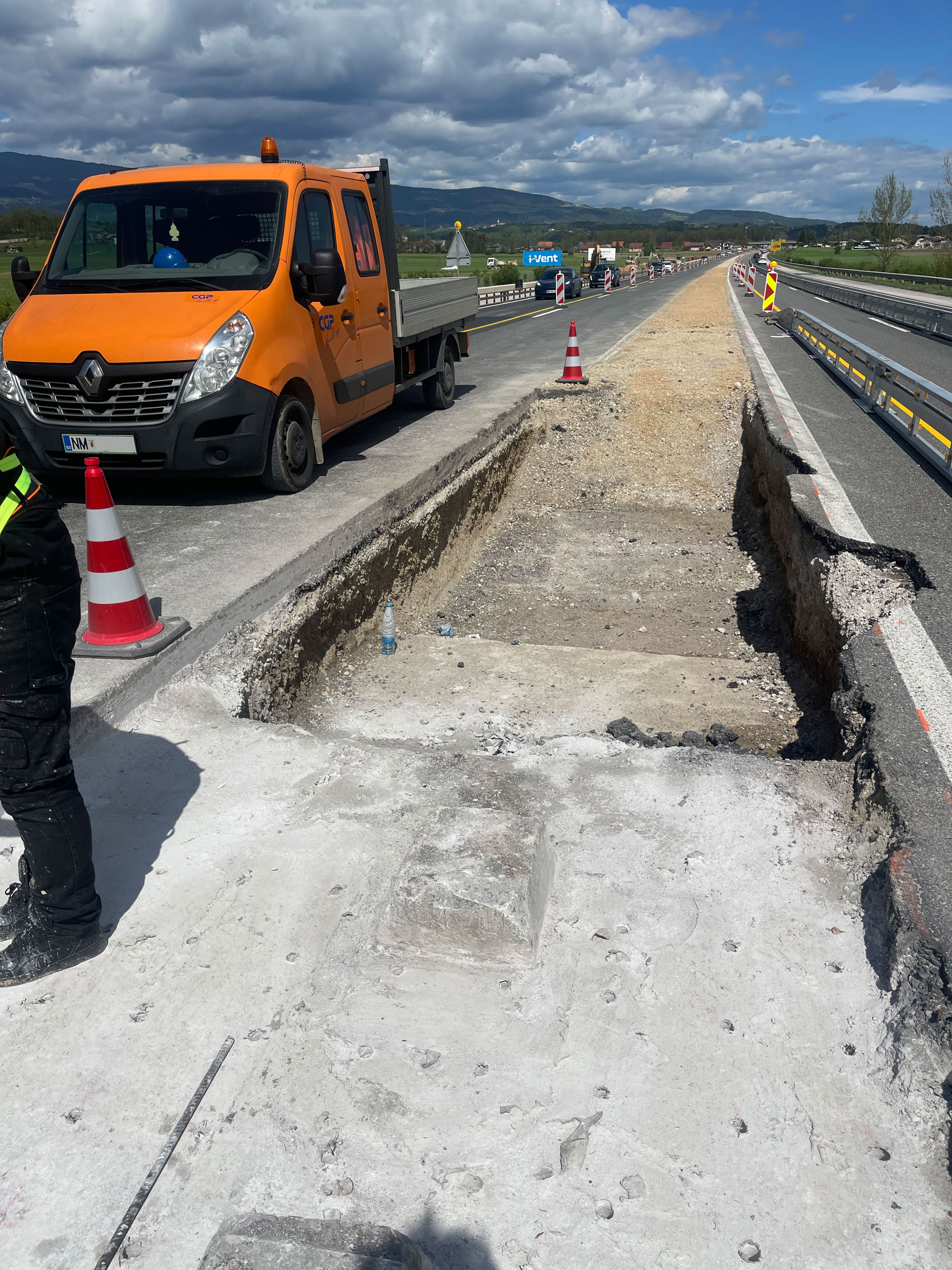
A Real Infrastructure Project in Dramlje, Slovenia
During a demanding infrastructure project near Dramlje, Slovenia, the contractor needed to remove and reshape parts of a reinforced concrete bridge structure. The work had to be carried out with high precision, because the remaining bridge structure had to stay undamaged and structurally stable.
Instead of using explosives or aggressive impact demolition methods, the contractor selected FRAKTUREX® non-explosive demolition agent for safe, controlled and low-vibration demolition.
Project Summary
| Project | Bridge renovation and controlled demolition |
| Location | Dramlje, Slovenia |
| Material | Reinforced concrete |
| Application 1 | Controlled demolition of bridge edge |
| Application 2 | Deepening the area below the former central concrete barrier |
| Main challenge | Protecting the remaining bridge structure and bridge statics |
| Method | FRAKTUREX® non-explosive demolition agent |
| Special condition | Drill holes had to remain clean and dry before application |
The Challenge
The project required controlled demolition on an existing reinforced concrete bridge structure. One part of the work involved removing approximately one metre of concrete from the bridge edge, while the second part involved deepening the area below a removed central concrete barrier.
Because the work was carried out on a bridge, uncontrolled vibration, heavy impact forces or blasting could have created unnecessary risk for the remaining structure. A controlled demolition method was therefore essential.
Part 1: Controlled Demolition of the Bridge Edge
The first part of the project focused on removing a section of the reinforced concrete bridge edge. The demolition line was close to the outer edge of the bridge, and the remaining structure had to remain intact.
FRAKTUREX® was selected because it develops expansive pressure gradually inside drilled holes, allowing reinforced concrete to crack in a controlled way without shock waves or explosive force.
Preparing the Bridge Deck
Before FRAKTUREX® could be applied, the bridge deck was prepared by drilling a series of holes along the planned demolition line. Correct hole positioning was important to guide the crack in the desired direction.

Figure 1. Preparing the reinforced concrete bridge deck before controlled demolition.
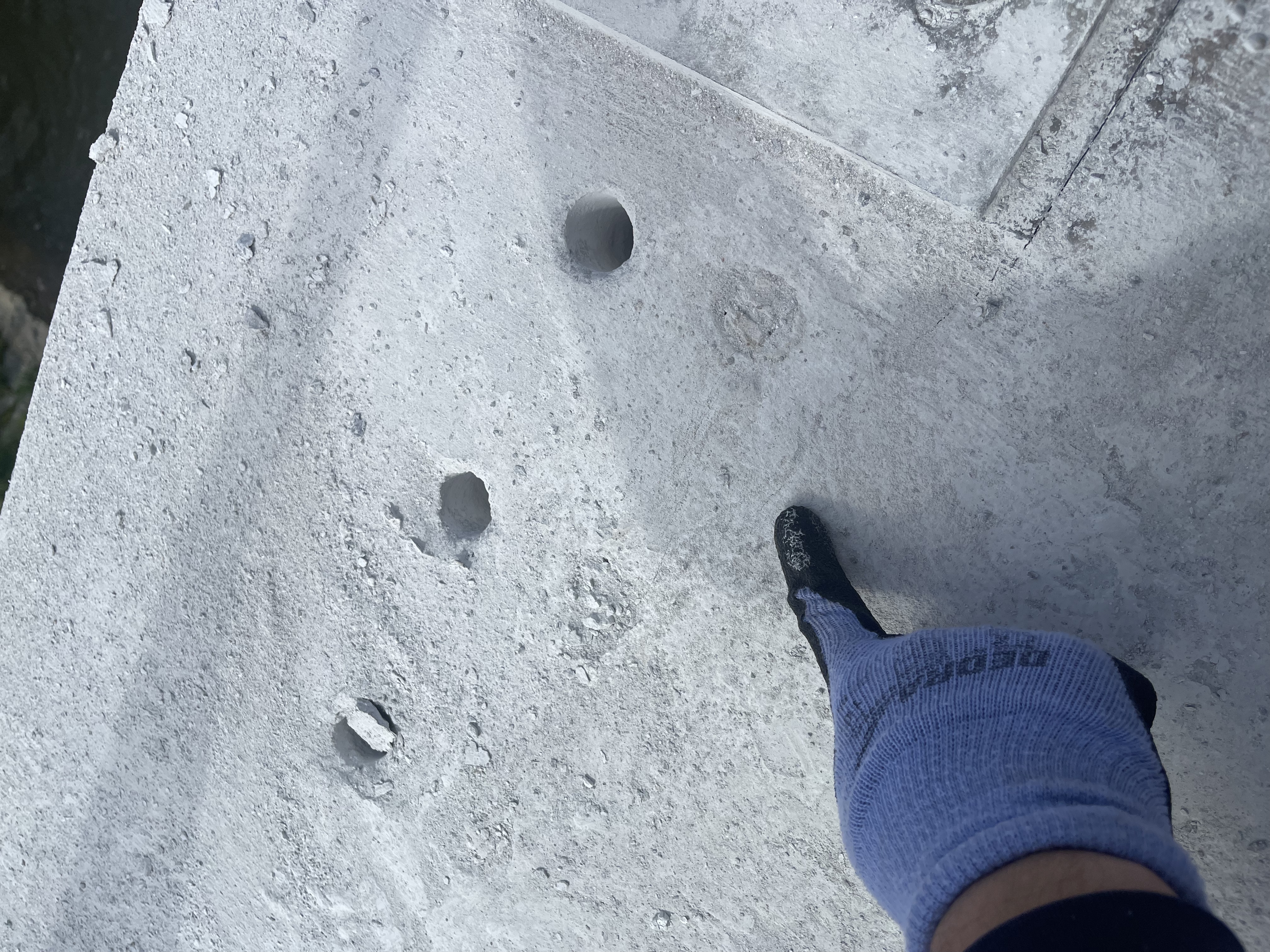
Figure 2. Drilled holes prepared for FRAKTUREX® application.
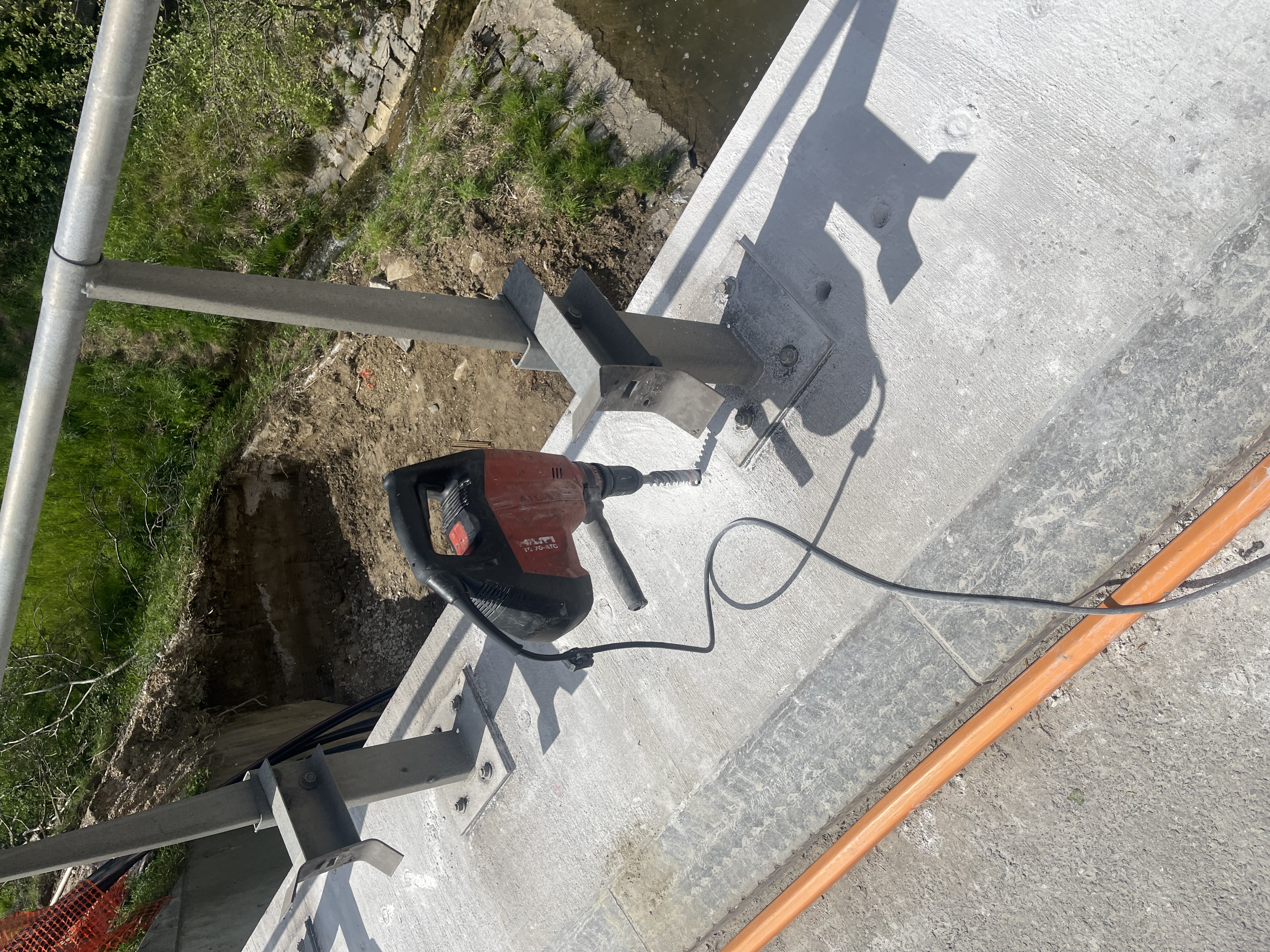
Figure 3. Accurate hole spacing helped direct the cracking line.
Application of FRAKTUREX®
After drilling, the holes were cleaned and filled with properly mixed FRAKTUREX®. During the project, rainwater filled some of the holes, which temporarily prevented the material from working correctly.
After the water was removed and the holes were properly cleaned and dried, the application was repeated and the reaction proceeded as expected. This confirmed one of the most important practical rules: drill holes must be clean and dry before FRAKTUREX® is poured in.
Controlled Crack Development
Once the expansive reaction started, pressure gradually developed inside the reinforced concrete. Instead of creating shock waves or uncontrolled breaking, FRAKTUREX® produced controlled cracks along the drilled line.
This was especially important because the demolition was carried out close to the edge of the bridge, while the remaining bridge structure had to stay intact.

Figure 4. The first controlled crack developed along the planned drilling line.

Figure 5. Close-up of the crack following the drilled hole pattern.

Figure 6. Controlled cracking near steel railing supports.

Figure 7. The crack continued to propagate through the reinforced concrete.
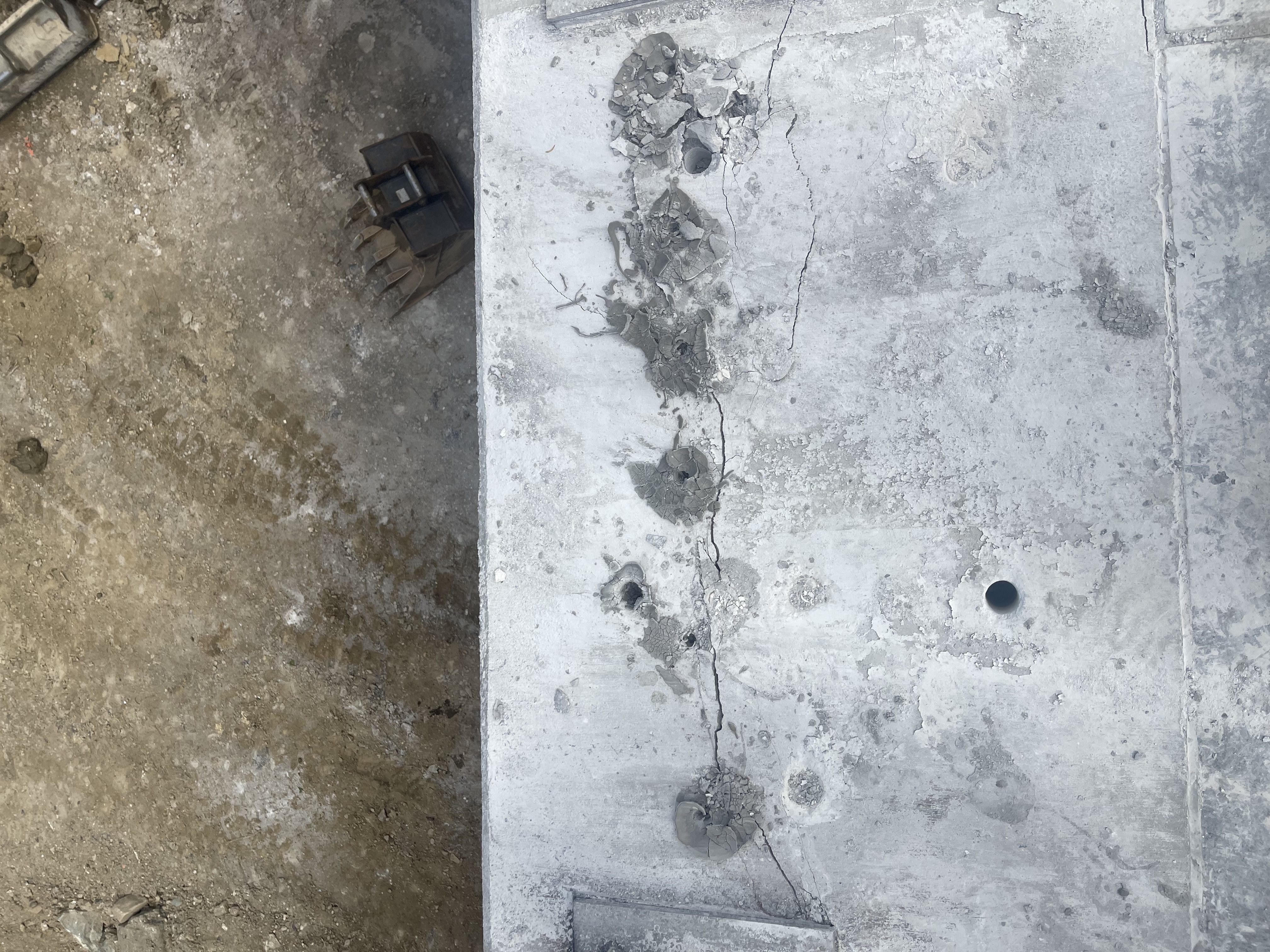
Figure 8. The bridge edge was successfully cracked along the planned demolition line.
Bridge Edge – Before & After
The comparison below clearly shows the result achieved with FRAKTUREX®. The reinforced concrete cracked exactly along the planned line, allowing the damaged bridge edge to be removed while preserving the remaining bridge structure.

Figure 9. Before – the reinforced concrete bridge edge before FRAKTUREX® application.

Figure 10. After – controlled removal of the bridge edge while protecting the remaining structure.
Part 2: Deepening Below the Former Central Concrete Barrier
The second stage of the project involved another demanding operation. After the concrete median barrier had been removed using heavy machinery, the contractor needed to deepen the reinforced concrete underneath so that the bridge could be reconstructed.
Once again, the objective was not simply to break concrete, but to remove it without introducing excessive vibration into the bridge deck. FRAKTUREX® provided the controlled demolition needed for this precision work.

Figure 11. Drilled holes prepared below the former central barrier.

Figure 12. Extensive drilling prepared the concrete for controlled demolition.

Figure 13. Large-scale preparation before the FRAKTUREX® application.

Figure 14. Pouring the freshly mixed FRAKTUREX® into the drilled holes.
Customer Feedback
"The greatest advantage of FRAKTUREX® was that it allowed us to perform controlled demolition without explosives or heavy impact equipment. It was the ideal solution because blasting was not permitted on this bridge project. The supplier's technical support was excellent. They visited the site, demonstrated the correct application procedure and explained every step, from drilling to pouring the material. We experienced one issue when rain filled several drill holes with water. After removing the water and following the recommended procedure, everything worked exactly as expected. This showed how important it is to keep the drill holes clean and dry before application. Overall, the project confirmed that FRAKTUREX® is an extremely effective solution whenever conventional demolition methods are not suitable."
— Infrastructure contractor, Slovenia
Why FRAKTUREX® Was the Right Choice
- Controlled demolition without explosives
- No shock waves that could affect the remaining bridge structure
- Minimal vibration during cracking
- Suitable for reinforced concrete
- Safe for infrastructure renovation projects
- Precise crack control through drilling layout
- Ideal where structural stability must be preserved
- Supported by on-site technical assistance
Final Result
The Dramlje bridge renovation demonstrated how FRAKTUREX® can be successfully used on demanding infrastructure projects where precision is more important than demolition speed.
Both the bridge edge removal and the deepening beneath the former central barrier were completed without blasting and without damaging the remaining bridge structure. The project confirmed that FRAKTUREX® is a reliable solution whenever reinforced concrete must be removed safely, quietly and under full control.